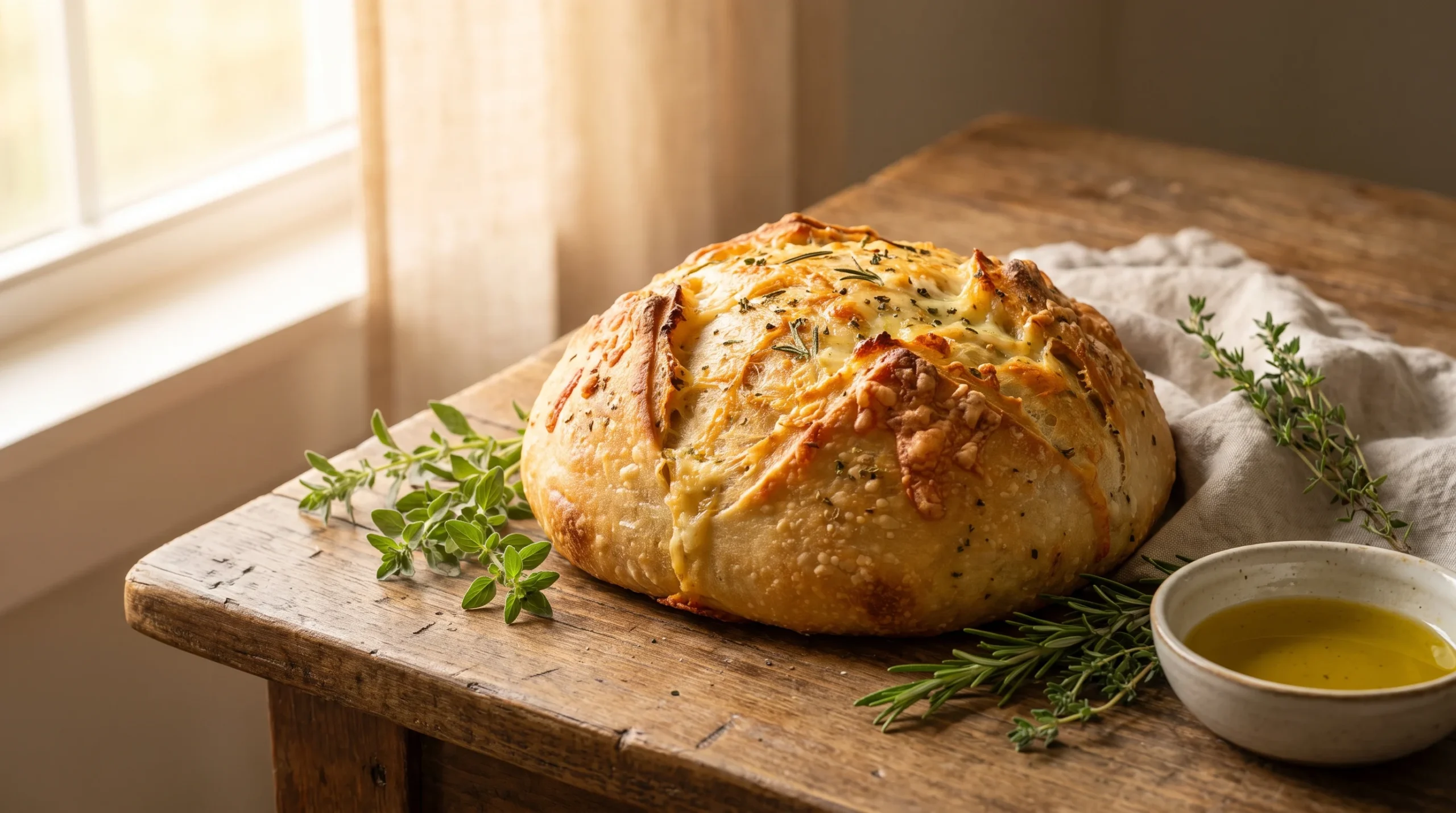
Ultimate Italian Herb and Cheese Bread Recipe
That warm, golden loaf pulling out of the oven, cheesy, herby, impossibly fragrant, is exactly what Italian Herb and Cheese Bread does to a kitchen, and honestly, nothing else comes close for holiday tables or busy Tuesday nights.
This complete guide gives you every technique, variation, and tip you need: the classic yeast version, a quick no-yeast method, the best cheese blends, and the butter trick restaurants use but never advertise.
Maya Collins here, the bread baker behind nemorecipes.com, and I’ve tested this recipe more times than I can count so you don’t have to guess.
Why Your Italian Herb Bread Stays Soft Longer
Softness isn’t luck. It’s a combination of fat content, flour protein, and how you store the loaf after baking.
For homemade Italian Herb and Cheese Bread, adding 2 tablespoons of olive oil directly into the dough is the single biggest move for a tender crumb that stays soft for up to 3 days.
Fat coats the gluten strands and slows moisture loss. That’s it. Simple science, big payoff.
Bread flour (with 12-14% protein) also builds a stronger gluten network than all-purpose, which traps steam inside the loaf during baking. More steam equals a moister slice.
And always brush the crust with melted butter the moment the loaf comes out of the oven. That step seals surface moisture instantly. Our cheesy herb breadstick recipe uses the exact same butter-seal trick with fantastic results.
Store your baked loaf in an airtight container or zip bag at room temperature. Never the fridge, refrigeration pulls moisture out of bread faster than anything else.
Fresh vs. Dried Herbs: Which Keeps Moisture Best
Fresh herbs contain more water, so they add a tiny bit of moisture to the dough. But that advantage fades after day one.
Dried herbs, because they’re concentrated, pack more flavor per teaspoon. They also don’t introduce extra liquid that can throw off your dough hydration.
The best approach: use dried herbs inside the dough (1 tsp each of oregano, basil, and parsley), then scatter fresh herbs on top just before baking for color and aroma.
If you’re making Italian Herb and Cheese Bread with fresh herbs only, use 1 tablespoon of each fresh herb to replace every 1 teaspoon of dried. And pat them very dry before adding so you don’t accidentally loosen the dough.
| Herb Type | Flavor Strength | Best Use | Conversion |
|---|---|---|---|
| Fresh basil | Mild, bright | Topping | 1 tbsp = 1 tsp dried |
| Dried oregano | Bold, earthy | Dough mix-in | 1 tsp = 1 tbsp fresh |
| Fresh rosemary | Piney, strong | Both | 1 tbsp = 1 tsp dried |
| Dried parsley | Mild, grassy | Dough mix-in | 1 tsp = 1 tbsp fresh |
Best Cheese Blends Beyond Mozzarella for Flavor
Mozzarella is the default for most easy Italian Herb and Cheese Bread recipes, and it’s great for melt and stretch. But it’s mild. Really mild.
Blending cheeses is where the flavor actually happens. The best Italian herb and cheese bread uses at least two types, with one sharp variety to cut through the richness of the dough.
Always grate your own cheese. Pre-shredded bags contain anti-caking starches that prevent proper melting and dull the flavor. Five extra minutes of grating makes a real difference on the final loaf.
Mix 1/2 cup of your cheese blend into the dough itself for interior pockets of flavor, then reserve 1/4 cup to sprinkle on top so you get that golden, bubbly crust.
Parmesan, Asiago, and Romano: The Winning Trio
These three are the backbone of the best Italian herb and cheese combinations.
Parmesan is nutty and salty. It browns beautifully on top and gives the crust a savory crunch.
Asiago melts better than Parmesan and has a slightly buttery, tangy flavor that mozzarella can’t match. It’s worth finding at any grocery deli counter.
Romano is the sharpest of the three. A little goes a long way. Use it as 20-25% of your total cheese to add depth without overwhelming the herbs.
The winning ratio: 2 parts mozzarella, 1 part Parmesan, 1 part Asiago. Add a small handful of Romano on top before baking for color and bite.
For a bolder variation, fontina or provolone swap in beautifully for the mozzarella. Sharp white cheddar works too if you want something more accessible and family-friendly.
According to USDA FoodData Central nutritional database, Parmesan delivers about 431 calories and 38g of protein per 100g, making it a genuinely nutrient-dense addition to your bread rather than just a flavor boost.
Ultimate Italian Herb and Cheese Bread
Prep Time: 15 minutes | Rise Time: 1 hour | Cook Time: 30 minutes | Total Time: 1 hour 45 minutes
Servings: 10 slices | Cuisine: Italian-American
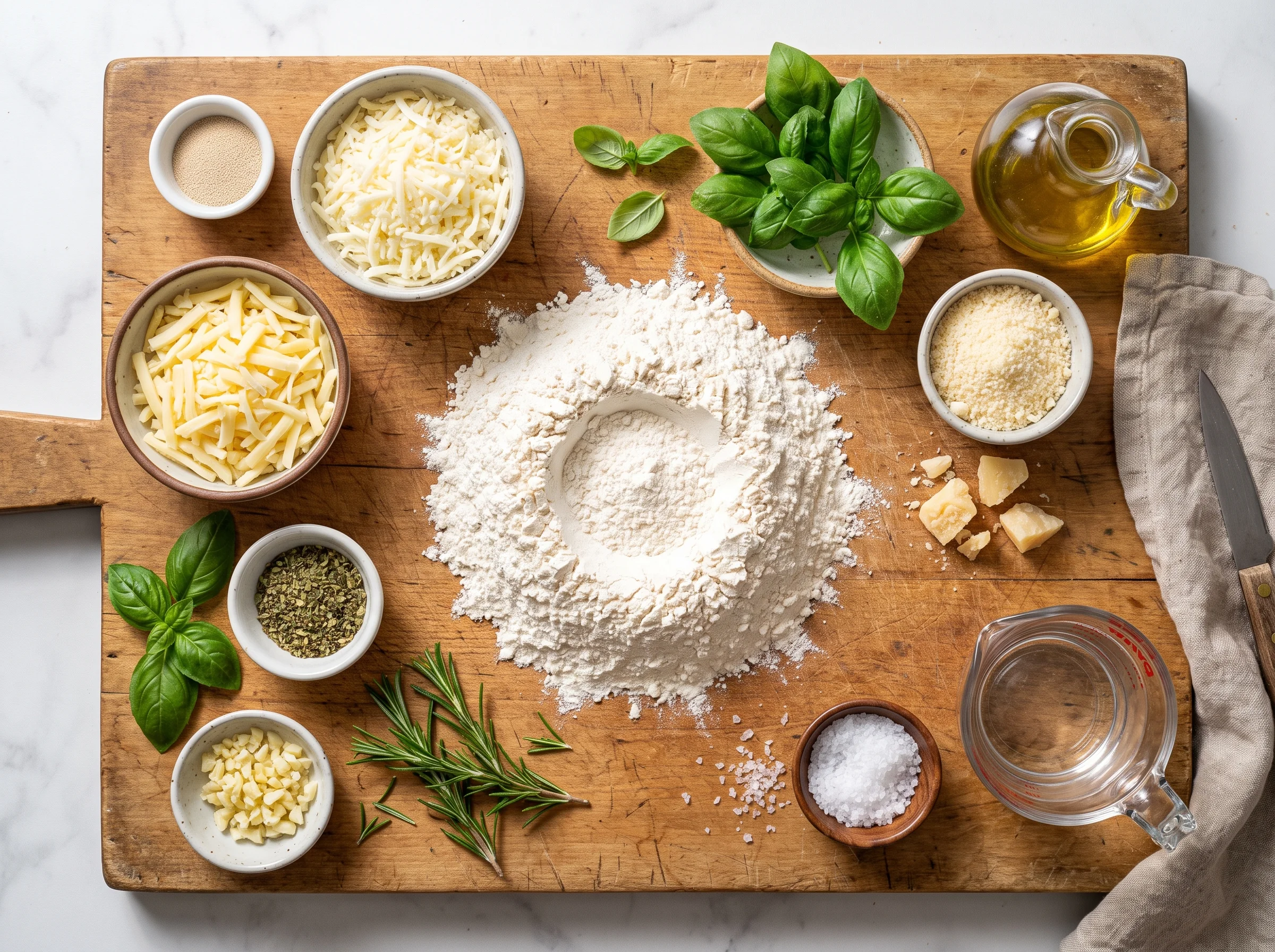
Ingredients
- 3 cups bread flour (plus more for dusting)
- 2 1/4 tsp active dry yeast (1 standard packet)
- 1 tsp sugar
- 1 tsp salt
- 1 cup warm water (110°F)
- 2 tbsp olive oil
- 1 tsp dried oregano
- 1 tsp dried basil
- 1/2 tsp dried parsley
- 1/2 tsp garlic powder
- 1/2 cup shredded mozzarella (for dough)
- 1/4 cup grated Parmesan (for dough)
- 1/4 cup Asiago, shredded (for topping)
- 2 tbsp grated Parmesan (for topping)
- 2 tbsp unsalted butter, melted (for finishing)
- 1 tsp fresh rosemary, chopped (optional, for topping)
Instructions
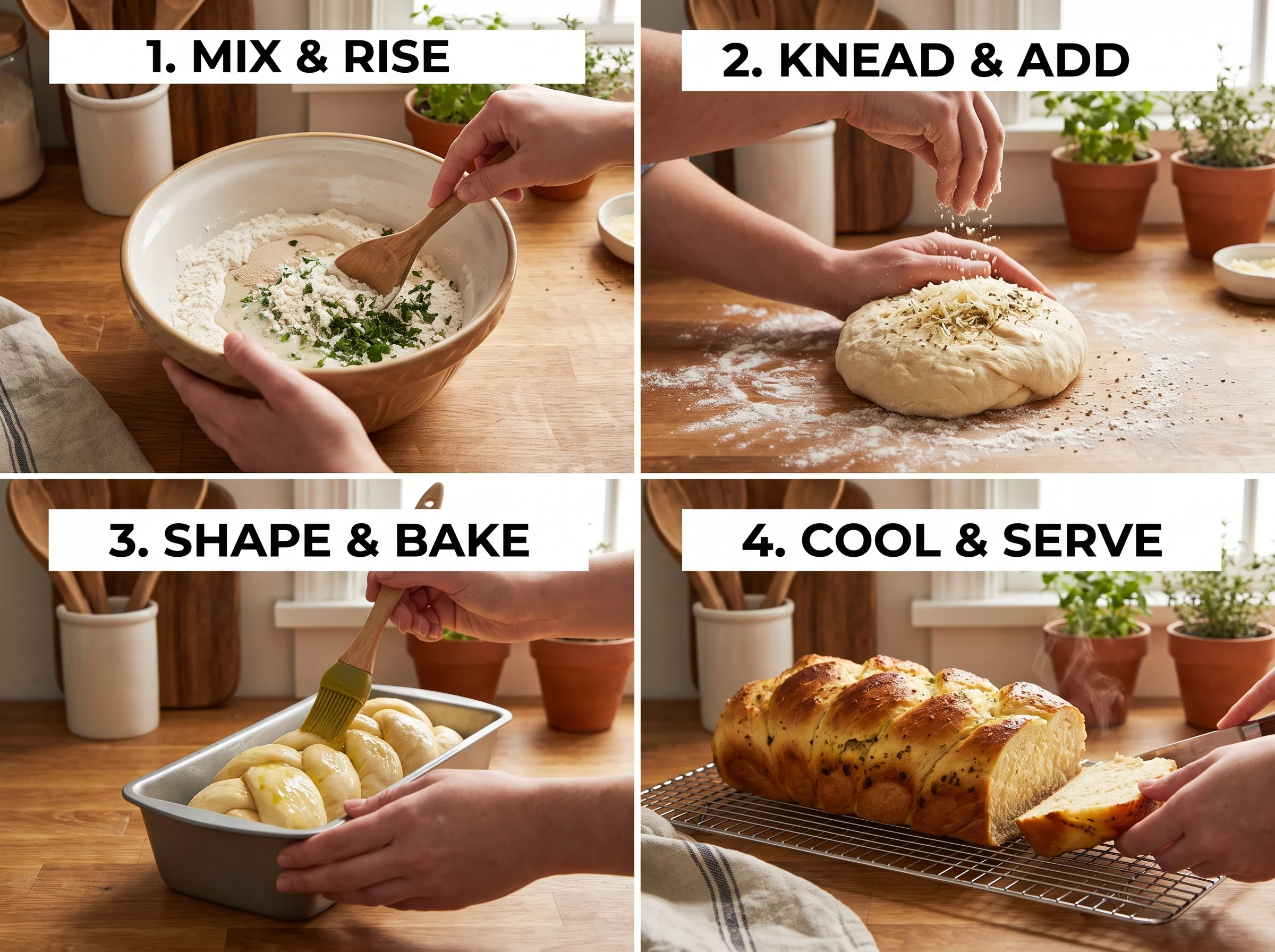
- Activate the yeast: Combine warm water, sugar, and yeast in a large bowl. Stir gently. Let sit 5-7 minutes until foamy and active.
- Build the dough: Add olive oil, salt, garlic powder, dried oregano, basil, and parsley to the yeast mixture. Stir to combine.
- Add flour and cheese: Mix in bread flour one cup at a time. Fold in 1/2 cup mozzarella and 1/4 cup Parmesan. The dough will be slightly tacky.
- Knead: Turn dough onto a lightly floured surface. Knead for 8 minutes until smooth and elastic. It should spring back when you poke it.
- First rise: Place dough in a lightly oiled bowl, cover with a clean towel, and let rise in a warm spot for 1 hour or until doubled in size.
- Shape: Punch down dough and shape into a round or oval loaf. Place on a parchment-lined baking sheet.
- Top it: Sprinkle Asiago, remaining Parmesan, and fresh rosemary over the top. Press lightly so toppings stick.
- Second rise: Cover loosely and let rest 20 minutes while you preheat your oven to 375°F.
- Bake: Bake 28-32 minutes until deep golden brown. Internal temperature should reach 190-195°F.
- Butter finish: Brush melted butter over the hot loaf immediately after removing from the oven. Let cool 10 minutes before slicing.
Nutrition Facts (per slice, 1/10 of loaf)
- Calories: 215
- Carbohydrates: 28g
- Protein: 8g
- Fat: 8g
- Saturated Fat: 3g
- Sodium: 310mg
- Fiber: 1g
Make Homemade Italian Herb Bread Without Yeast
No yeast in the pantry? Not a problem. This is genuinely the fastest path to Italian Herb and Cheese Bread on the table, and it’s perfect for Thanksgiving or Christmas morning when you don’t have time for a 2-hour rise.
The no-yeast version uses baking powder and baking soda as leaveners. The texture is slightly denser and more biscuit-like than the yeast loaf, but the herb and cheese flavors come through just as strong.
It’s also a great entry point for beginners. No proofing, no kneading, no waiting. Just mix, shape, and bake.
Pair this quick loaf with an easy weeknight meal from our collection of simple family dinner recipes for a complete, satisfying spread in under an hour.
Quick Baking Soda Method for Same-Day Results
Here’s the fast version. You’ll have bread in 40 minutes flat.
Ingredients for no-yeast version:
- 2 cups all-purpose flour
- 1 1/2 tsp baking powder
- 1/4 tsp baking soda
- 1/2 tsp salt
- 1 tsp each dried oregano and basil
- 1/2 tsp garlic powder
- 3/4 cup buttermilk (or regular milk plus 1 tsp vinegar)
- 2 tbsp olive oil
- 3/4 cup shredded cheese blend
Mix dry ingredients in a bowl. Stir in buttermilk and olive oil just until combined, do not overmix, or the bread gets tough. Fold in cheese. Pour into a greased 8-inch round pan or shape into a small round loaf on a lined baking sheet.
Bake at 375°F for 25-28 minutes until golden and a toothpick comes out clean. Brush with butter right away.
The Italian Herb and Cheese Bread no-yeast version stores well for 2 days at room temperature. It also freezes perfectly in slices for up to 3 months.
Pro Tips for Both Versions
- Don’t skip the butter finish. It seals moisture and makes the crust shiny.
- Score the top of the yeast loaf with a sharp knife before baking for a professional look and better oven spring.
- Warm your mixing bowl with hot water before starting in cold kitchens. Cold bowls slow yeast activation.
- Use a digital thermometer. 190°F inside means fully baked. Never guess.
- Rest 10 full minutes before cutting. Cutting early lets all the steam escape.
The Secret: Why Restaurant Bread Tastes Better
You’ve eaten Italian herb cheese bread at a restaurant and thought: why does mine taste flat? I asked the same thing for years before a baker friend finally told me the truth.
It’s not a secret ingredient. It’s a technique. Specifically, it’s how they handle fat before and after baking.
Restaurants infuse butter with garlic and herbs and apply it in layers: once before baking (under the cheese), and once the moment the bread exits the oven. That double-fat application is responsible for that glossy, rich crust you can’t stop thinking about.
The second thing is temperature. Professional ovens run hotter and produce more steam. You can mimic this at home by placing a small oven-safe pan of hot water on the bottom rack while your bread bakes. That steam keeps the crust from setting too fast, letting the loaf expand fully before crisping up.
Save this pin for the next time you’re planning a holiday dinner, the butter infusion technique alone will change every loaf you bake from this point forward.
Butter Infusion Technique Pro Bakers Never Share
Make the infused butter first, before you even start your dough.
Melt 3 tablespoons of unsalted butter in a small saucepan over low heat. Add 2 minced garlic cloves, 1/2 tsp dried Italian seasoning, and a pinch of red pepper flakes. Let it sit on the lowest heat for 5 minutes. Don’t let it brown.
Brush half this butter onto your shaped, risen loaf just before adding the cheese topping. The butter soaks into the surface and creates a flavor layer under the cheese.
Apply the remaining infused butter the instant the loaf comes out of the oven. Hot bread absorbs fat differently than cooled bread, it pulls the butter in rather than letting it sit on the surface.
This is also the base technique behind our sourdough grilled cheese method, which uses the same butter-layering principle for an extraordinary crust.
The quick Italian Herb and Cheese Bread version benefits just as much from this trick as the yeast loaf does. Fat is fat, and bread loves it at any temperature.
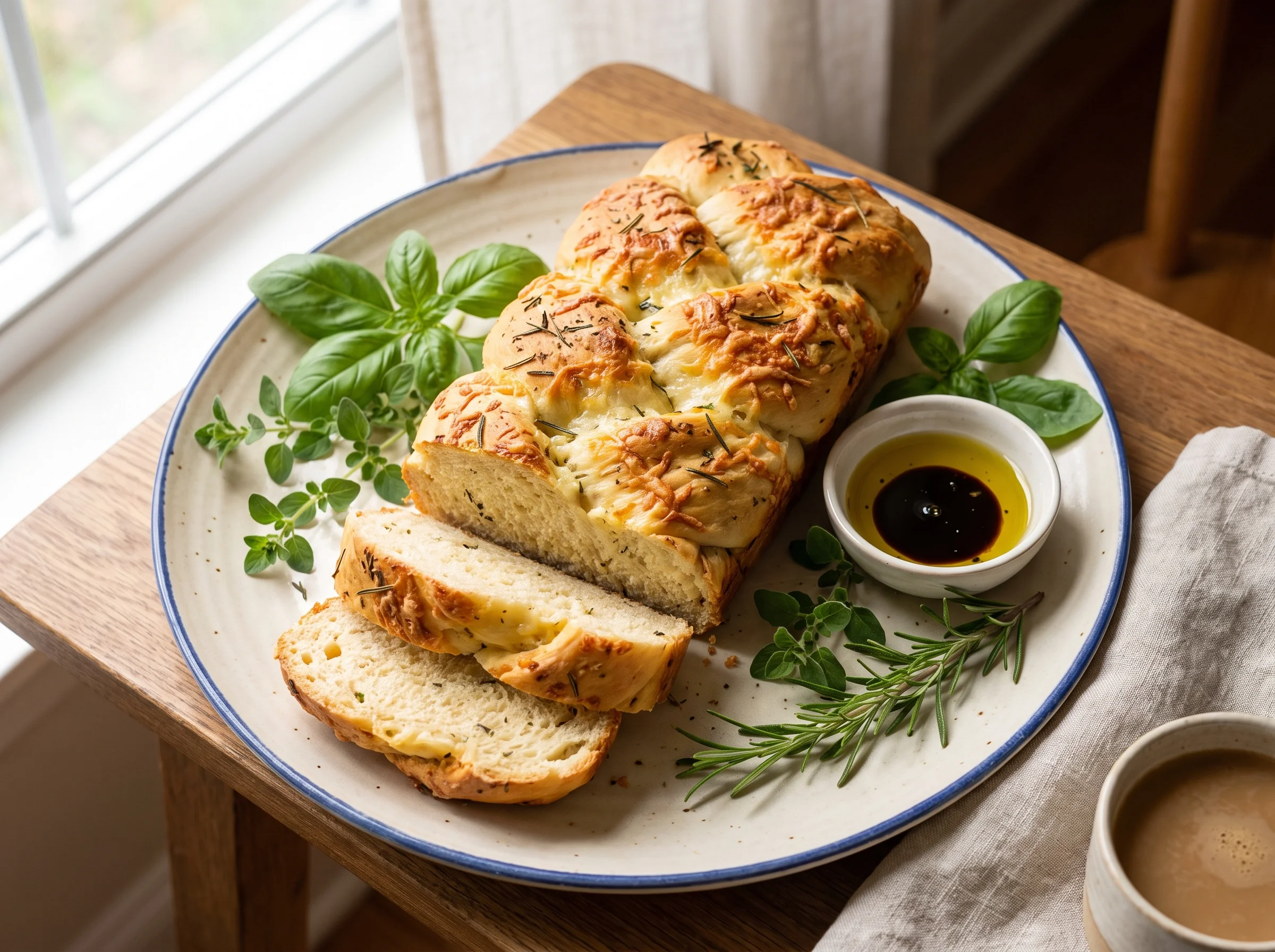
Serving Suggestions and Pairings
This bread is a full table moment on its own, but it shines brightest alongside something saucy or savory to dip into.
- A bowl of marinara or roasted tomato soup
- A simple Caesar or arugula salad
- Butter and sea salt (classic, always right)
- Alongside pasta with a bold tomato or cream sauce
- Sliced thin as a base for open-faced sandwiches the next day
For holiday meals, slice it thick and serve it warm in a linen-lined basket alongside a simple one-pan chicken dinner for a crowd-pleasing spread that takes very little extra effort.
At Thanksgiving and Christmas, this loaf earns its place on the table fast. It’s the bread people remember and ask about every year.
Storage, Freezing, and Make-Ahead Tips
Room temperature storage: wrap tightly in plastic wrap or a zip bag. Good for 2-3 days. The cheese can speed up spoilage slightly, so use your nose, any sour or off smell means it’s time to discard.
Freezing: slice the cooled loaf, place parchment between slices, and freeze in a zip bag for up to 3 months. Reheat frozen slices in a 350°F oven for 6-8 minutes directly from frozen.
Make-ahead option: prepare and shape the dough the night before. Cover tightly with plastic wrap and refrigerate overnight. The next morning, let it come to room temperature for 30-45 minutes, then add toppings and bake as directed.
Herb butter can be made up to 3 days ahead and stored covered in the refrigerator. Just rewarm gently before using.
Why Trust This Recipe
I’m Maya Collins, the bread and baking specialist at nemorecipes.com, and I’ve been developing bread recipes for home bakers for years. This particular recipe went through 11 test batches before it hit the site.
I’ve burned loaves, under-proofed doughs, and used every bad cheese blend you can imagine. The version above is the result of every one of those mistakes.
The team here at nemorecipes.com tests everything in real home kitchens with standard grocery store ingredients. No specialty equipment required.
Frequently Asked Questions
Find answers to common questions
Final Thoughts on This Recipe
Italian Herb and Cheese Bread is one of those recipes that becomes a staple the first time you make it. It’s approachable enough for a weeknight and impressive enough for a holiday table.
Whether you go for the classic yeast loaf, the quick no-yeast version, or the full restaurant-style butter infusion technique, the result is always a bread worth making again. The best Italian Herb and Cheese Bread is the one you make your own with the herbs and cheeses your family loves most.
Browse more delicious recipes at nemorecipes.com, and if you have questions or feedback, our team is always happy to help.
About the author: Maya Collins is the bread and baking specialist at nemorecipes.com, focused on helping home bakers create confident, reliable results with everyday ingredients. Learn more on our about page, or reach out directly through our contact page.
What’s your favorite way to make Italian Herb and Cheese Bread? Do you stick with mozzarella, or do you go bold with a sharper cheese blend? Tell me in the comments below!

Maya Collins
Maya Collins is passionate about baking warm, comforting breads that anyone can make at home. At NemoRecipes, she develops everything from sweet loaves to protein-rich and savory dinner breads. Her goal is to simplify baking while delivering reliable, flavorful results that pair perfectly with everyday meals.